
Negativity
Positivity and negativity are powerful feedback processes in human behavior. Positive feedback encourages us to continue doing what we have done so far. Negative feedback, on the contrary, generally acts as a warning signal that tells us to moderate or stop what we are doing and to redress the course of our actions. Positive feedback can be linked to approach behavior and negative feedback to avoidance behavior. Through the course of evolution, these two processes, approach and avoidance, have helped us survive in complex environments. A powerful indicator of what is possible for a system is the positivity/negativity ratio of feedback; that is, how many instances of positive vs. negative feedback we can observe in a human interaction process, such as a team meeting or in a couple’s conversation. 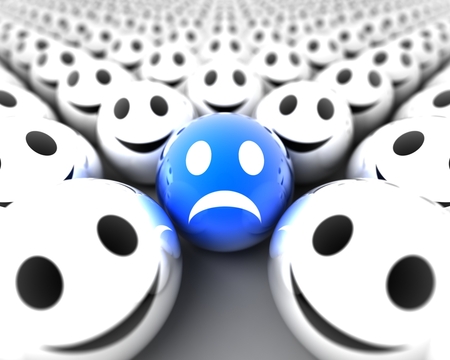
In psychology, the negativity effect is the tendency of people, when evaluating the causes of the behaviors of a person they dislike, to attribute their positive behaviors to the environment and their negative behaviors to the person’s inherent nature. The negativity effect is the inverse of the positivity effect, which is found when people evaluate the causes of the behaviors of a person they like. Both effects are attributional biases. The negativity effect plays a role in producing the fundamental attribution error, a major contributor to prejudice.
The term negativity effect also refers to the tendency of some people to assign more weight to negative information in descriptions of others. Research has shown that the negativity effect in this sense is quite common, especially with younger people; older adults, however, display less of this tendency and more of the opposite tendency (the positivity effect)